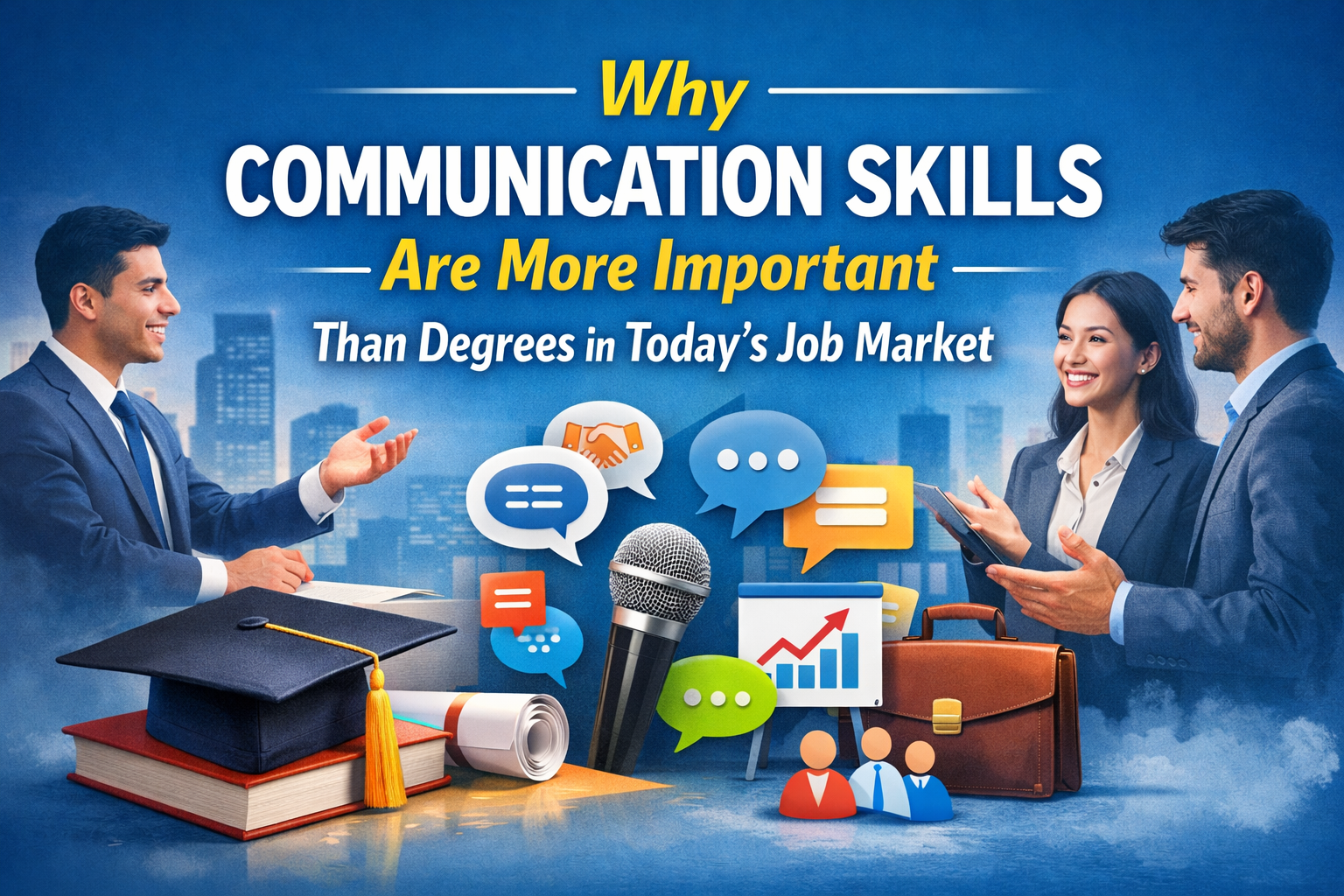
Why Communication Skills Are More Important Than Degrees in Today’s Job Market
In today’s fast-changing job market, having a degree is no longer enough. While education is important, employers are now giving more value to communication skills than just academic qualifications. Many talented people miss good job opportunities—not because they lack knowledge, but because they cannot express it clearly. This is where communication skills make the real difference.
Degrees Open Doors, Communication Takes You Inside
A degree can help you get shortlisted, but communication skills help you get selected. During interviews, employers closely observe how confidently you speak, how clearly you explain your ideas, and how well you listen and respond. A candidate with average technical knowledge but strong communication skills often performs better than someone with high qualifications but poor communication.
At Skills 2 Succeed, we have seen this repeatedly—students improve their job outcomes dramatically once they work on speaking, listening, and presentation skills.
The Workplace Runs on Communication
Modern workplaces depend heavily on teamwork, meetings, emails, client interactions, and presentations. No matter what role you are in—IT, management, sales, safety, or operations—you need to communicate with colleagues, seniors, and clients every day.
Good communication helps you:
-
Share ideas confidently
-
Avoid misunderstandings
-
Build strong professional relationships
-
Handle conflicts calmly
-
Grow into leadership roles
Employers prefer people who can work well with others and represent the company professionally.
Communication Builds Confidence
Strong communication skills boost self-confidence. When you know how to express your thoughts clearly, you feel more confident in meetings, interviews, and public speaking situations. Confidence creates a positive impression and shows employers that you are capable and dependable.
Many students and professionals feel nervous not because they lack knowledge, but because they fear speaking. With proper training and practice, this fear can be overcome.
Employers Want Skills, Not Just Certificates
Today’s companies look for job-ready skills. They want employees who can explain problems, suggest solutions, and communicate with clients effectively. This is why soft skills training is now a key requirement across industries.
Degrees show what you studied. Communication skills show how well you can perform.
How Skills 2 Succeed Helps
At Skills 2 Succeed, we focus on practical communication training that prepares learners for real-world situations. Our programs help students and professionals improve:
-
Spoken English and clarity
-
Interview communication
-
Workplace communication
-
Presentation and public speaking
-
Professional behavior and confidence
We believe that with the right guidance, anyone can become a strong communicator—no matter their background.
Final Thoughts
In today’s competitive job market, communication skills are not optional—they are essential. Degrees may get you noticed, but communication skills help you grow, succeed, and lead. If you want a successful career, invest in learning how to communicate effectively. It’s one skill that will benefit you for life.